This is part-2 of the Edward II and Richard II posts. In part-1, we got to know the family backgrounds and personalities of the dramatic twins Christopher Marlowe and William Shakespeare; we traced the family trees of Edward II and Richard II in English history; I then recommended a few stage and radio drama productions and ended with a summary of both stories. I’m going into part-2 discussions assuming you know what the stories are about so we can dive straight into some geeky details. We’ll focus mostly on Gaveston and Edward’s relationship, as well as briefly compare and contrast one of the equivalent scenes in both plays.
As we have seen, Edward II and Richard II have very similar overarching story lines and central characters. Both kings are surrounded by flatterers and both are opposed and rebelled against by angry nobles. Both kings are pretty weak and incompetent when push comes to shove, and both end up not only being toppled from their thrones but also murdered in humiliation.
Edward II
Let’s talk about Edward II first. King Edward is accompanied by, obsessed with, one specific flatterer called Gaveston. In one sense, to put it simply, he’s the trigger of the conflict and the cause of Edward’s downfall. The play opens with “enter Gaveston reading on a letter that was brought him from the King”, and he reads
GAVESTON
‘My father is deceased; come, Gaveston…’ (1.1)
King Edward I has just died. Edward II ascends the throne and immediately asks Piers Gaveston to return to him, whom his father exiled.
The 2025 production of Edward II in the Swan Theatre in Stratford upon Avon opened with the funeral of Edward I. There were the nobles and Edward II himself mourning in their best military uniform. There was a glittering bejewelled cross, and a crown, and gold and silver sceptres and swords on yards and yards of scarlet silk that covered the coffin. The stage was glorious and dazzling. The scene was entirely silent, until Gaveston read out the letter, and it lasted until all the audience came through the doors and found their seat, which took what felt like a long time. The other play I watched during the same trip in the theatre space next door was Hamlet, which interestingly also opened with a death and a funeral procession.
Let me read you the opening soliloquy of Gaveston in full:
GAVESTON
‘My father is deceased; come, Gaveston,
And share the kingdom with thy dearest friend.’
King Edward II’s father is dead, Gaveston is called to come to the king and share the kingdom. We don’t know who Gaveston is yet, but we know who Edward is. Edward is Gaveston’s dearest friend. Gaveston finishes reading the letter and speaks for himself:
Ah, words that make me surfeit with delight!
What greater bliss can hap to Gaveston,
Than live and be the favourite of a king?
Now we know who he is: he is the favourite of the king.
Sweet prince, I come; these, these thy amorous lines (referring to the letters)
Might have enforced me to have swum from France,
And, like Leander, gasped upon the sand,
So thou wouldst smile and take me in thine arms.
Leander, you just need to know for our purpose here, is from a classical story who swam a lot to see his lover.
The sight of London to my exiled eyes
Is as Elysium to a new-come soul;
Gaveston has been in exile from London and England, that’s why he’s in France. Seeing London is like seeing heaven, the reason is…
Not that I love the city or the men,
But that it harbours him I hold so dear,
The King, upon whose bosom let me lie,
And with the world be still at enmity.
What need the arctic people love starlight,
To whom the sun shines both by day and night?
Slightly off topic: I really love these last two lines. The Elizabethan age sees a science and technology boom. I love how the new knowledge of world geography and marine navigation made it into literature and Edward II here.
Farewell, base stooping to the lordly peers;
My knee shall bow to none but to the King. (1.1-19)
We’ll come back to these last two lines later. For now, notice two things: firstly, the physical movement of the body, “stoop” and “bow”; secondly, the benefit of being the favourite of the king, is to NOT stoop and NOT bow to anyone but the king.
After this Gaveston eavesdrops on a conversation between King Edward and the nobles about if the king is allowed to call Gaveston back to England from exile. Scene 1 is pretty representative of what happens in the rest of the play. Edward says I want Gaveston, the nobles say no you can’t. Edward says I’m the king, I’ll do whatever I want, why SHOULD I submit to you? I’ll chop off your head if you argue anymore. The nobles say, you can try, WE are the ones who have armies, we’ll chop off your head instead.
It’s pretty extraordinary conversation. Just imagine the lords saying this to Henry VIII. Absolutely no way. Edward is a weak king. That’s clear pretty much from the very beginning. He keeps asking why should I be overruled like this? Why can’t I have my will? Edward is not very precious about his crown and kingdom either. He much prefers Gaveston. For example, after an angry exchange, Gaveston is bundled away, Edward begs the lords to give Gaveston back. He tries to mollify them by dishing out important offices and titles of the kingdom, but he does it as if a sulking kid throwing out toys:
EDWARD
If this content you not, (as in, if the titles don’t satisfy you)
Make several kingdoms of this monarchy,
and share it equally amongst you all,
So I may have some nook or corner left
To frolic with my dearest Gaveston. (4.69-73)
It’s sweet but it doesn’t become a king. The king’s desire and duty, Edward’s private and public life come into conflict. Gaveston is all he wants. But that’s not allowed.
Though, as a king, I have to say, he goes about having Gaveston in a very tactless and childish way. He says things like “I’ll have my will (1.77)”, “I WILL have Gaveston (1.95)”, “Curse me. Depose me. Do the worst you can (4.56-57)”. I just want to roll my eyes. He’s doing a rubbish job at keeping his favourite. I feel a bit sorry for Gaveston, he thinks his lover is the all-powerful king and he imagines he’ll be safe sitting at his right hand and enjoying all England can offer. But it turns out this king is pretty useless at keeping him. Keeping him close, keeping him alive. Poor Gaveston. But we’ll see Gaveston himself is not the most intelligent and skilful in keeping his head on his shoulders. He’s pretty good at attracting hostility all by himself. So overall, a good pair, Edward and Gaveston.
Unfortunately Edward has a court-ful of gunpowder-y lords, every one of them has a thunder and lightening kind of temper. ‘I cannot and will not suffer this! I must speak up! I’m going to levy men right now!’ It sometimes looks like watching children bullying each other in the playground.
Speed up the story a bit: the nobles get the upper hand and Gaveston is gotten rid of. Edward actually starts a war against the nobles, and horror of horror, replaces one favourite with another! The nobles say no you can’t have him either. A lot of the play I’m just waiting to see who’s going to get their way.
Sexuality
One of the biggest selling points of this play in 2025 is the gay king and the same-sex relationship between Edward and Gaveston. You can tell just by looking at the cover photo of the RSC programme. So let’s talk about sexuality.
We’ve already seen the kind of intimate relationship between them. Gaveston is the king’s “favourite”, he compares himself to Leander. Edward describes himself as “thy friend, thy self, another Gaveston”. After lavishing material gifts on Gaveston, Edward asks him to “receive my heart”. Queen Isabella is caught on her way… (If I were Dominic Sandbrook I’d read this with a French accent)
ISABELLA
Unto the forest…
To live in grief and baleful discontent;
For now my lord the king regards me not,
But dotes upon the love of Gaveston:
He claps his cheeks, and hangs about his neck,
Smiles in his face, and whispers in his ears;
And, when I come, he frowns, as who should say,
“Go whither thou wilt, seeing I have Gaveston.” (2.47-54)
It is pretty clear that Edward and Gaveston have a romantic relationship. Edward’s downfall is a direct result from his favouring Gaveston against all advice and exceeds all bounds. The king is criticised for having a male lover by the court; their relationship is not accepted by the nobles because the nobles are homophobic. Edward is challenged, condemned and murdered for his sexuality. That seems to be how the RSC production read and interpreted it. I quote from the articles in the programme:
In 2025, with queer men enjoying higher levels of acceptance in the UK, it’s easy to think the battle has been won. But Edward II draws attention to the ways in which prejudice still exists, and reminds us that in some areas of culture and society, queerness is still seen as a sign of weakness.
Today, we celebrate Marlowe’s Edward II for both its thrilling pace and startling poetry, but also its enduring power to lend legitimacy, strength, and voice to the ongoing struggle of gay people in a still complex, and often hostile, environment.
I’m not commenting on how queerness is seen in society. I quote those to show you that Edward II the play becomes part of the discussion, put out there by RSC, about how gay people are discriminated against. The sexuality and tragedy of Edward II fits into the framework of this 21st century culture debate. I have given plenty examples by now that the relationship between Edward and Gaveston IS absolutely the starting point and central issue of this play. I don’t object to RSC or anyone reading and interpreting the play this way. RSC made a bold and stunning point with it. We have always made Shakespeare say what we want him to say, so why not Marlowe. That’s nothing new under the sun. But I don’t think that’s ALL Marlowe wanted to say with Edward II. So what I want to do in the next few minutes is to bring a few things to your attention and hopefully they’ll give the sexuality issue a broader context, add more depth to the reading and make the story more nuanced.
In scene 6, Edward’s brother Kent who has been loyal to him until this point says,
KENT
My lord, I see your love to Gaveston
Will be the ruin of the realm and you,
For now the wrathful nobles threaten wars;
And therefore, brother, banish him forever. (6.205-208)
My question is, in what way is the ruin of Edward II caused by his love for Gaveston? What is the reason of the nobles’ wrath towards Gaveston and their rebellion against the king?
Base
These are the ways the noble lords talk about Gaveston. Lancaster asking the King:
LANCASTER
My lord, why do you thus incense your peers
That naturally would love and honour you,
But for that base and obscure Gaveston? (1.98-100)
The nobles talking amongst themselves:
MORTIMER SENIOR
How now, why droops the Earl of Lancaster?MORTIMER JUNIOR
Wherefore is Guy of Warwick discontent?LANCASTER
That villain Gaveston is made an earl.MORTIMER SENIOR
An earl!WARWICK
Ay, and besides, Lord Chamberlain of the realm,
And Secretary too, and Lord of Man (Isle of Man).MORTIMER SENIOR
We may not, nor we will not suffer this. (2.9-15)
They are shocked and disgusted that Gaveston is given so high and so many titles. They refer to Gaveston as the “peasant… swollen with venom of ambitious pride (2.30)”, “that base peasant (4.7)”, “ignoble vassal (4.16)”, an “upstart (4.41)”. You get a sense of their gut feeling towards Gaveston. They despise him. The mere mention of his name is a bad taste in their mouth because he is from a lower social class than them. Their problem here is not that the king has a male lover, their problem is that someone who is a peasant nobody has risen above them all.
Physical interaction
The problem of this class hate is manifested and exacerbated through their physical interaction. Remember I asked you a few minutes ago to notice the physical movement of the body in these lines:
GAVESTON
Farewell, base stooping to the lordly peers;
My knee shall bow to none but to the King. (1.18-19)
He will never lower his head or bend his knees to the nobles again, which the nobles absolutely expect him to do. A few more examples and see if you can see a pattern and a problem. When Gaveston greets the king, Edward says:
EDWARD
Kiss not my hand;
Embrace me, Gaveston, as I do thee!
Why shouldst thou kneel; knowest thou not who I am? (1.139-141)
While to the nobles,
EDWARD
I’ll make thee rue these words…
The sword shall plane the furrows of thy brows
And hew these knees that now are grown so stiff. (1.90-94)
The nobles commenting on Gaveston hanging out with the king:
LANCASTER
‘My Lord of Cornwall’ now at every word;
And happy is the man whom he vouchsafes
For vailing of his bonnet one good look.
Thus, arm in arm, the King and he doth march—
Nay, more, the guard upon his lordship waits,
And all the court begins to flatter him.WARWICK
Thus leaning on the shoulder of the King,
He nods, and scorns, and smiles at those that pass.MORTIMER SENIOR
Doth no man take exceptions at the slave?LANCASTER
All stomach him, but none dare speak a word. (2.17-26)
Do you see? The King expects all the nobles to kiss his hand and to kneel, but Gaveston doesn’t need to show reverence to the King that way anymore. Edward embraces Gaveston, walks with him arm in arm and lets Gaveston lean on his shoulder. Their physical interaction and body language put Gaveston visually above all the lords. When the lords kneel to the King, they’re kneeling to Gaveston. It’s a spectacle that cannot be stomached by the high born lords and it disrupts the order, rank and powers of the kingdom.
This is demonstrated unmistakably the first time all of these people appear at one place in scene 4. According to the stage direction ‘Edward assumes the throne with Gaveston at his side’. Having Gaveston sitting at his side basically makes him a political equal. All nobles literally bristle with anger and disgust. It’s unsaid but you can tell the electricity in the air from Edward’s response to the atmosphere.
EDWARD
What, are you moved that Gaveston sits here?
It is our pleasure; we will have it so.
You can sense him squirming uncomfortably in his throne. Lancaster comments with a menacing sneer:
LANCASTER
Your grace doth well to place him by your side,
For nowhere else the new earl is so safe.MORTIMER SENIOR
What man of noble birth can brook this sight?
Quam male conveniunt! (How badly they go together.)
See what a scornful look the peasant casts.
Notice the contrast between ‘man of noble birth’ and ‘the peasant’.
PEMBROKE
Can kingly lions fawn on creeping ants?
Another contrast between the high and mighty and the lowly unworthy.
WARWICK
Ignoble vassal, that like Phaeton
Aspir’st unto the guidance of the sun.
A reference to the classical mythology where someone is overreaching his rank and heading for a disasterous fall.
MORTIMER JUNIOR
Their downfall is at hand, their forces down;
We will not thus be faced and over-peered.
We will not tolerate this scornful look from a peasant and we will not bow our head to this upstart.
EDWARD
Lay hands on that traitor Mortimer!MORTIMER SENIOR
Lay hands on that traitor Gaveston!
The nobles draw swords at this point. Kent, the brother of the King says,
KENT
Is this the duty that you owe your King?WARWICK
We know our duties; let him know his peers.
The nobles seize Gaveston. Edward panicking:
EDWARD
Whither will you bear him? Stay, or ye shall die.MORTIMER SENIOR
We are no traitors, therefore threaten not.
Gaveston at this point speaks for the first time:
GAVESTON
No, threaten not, my lord, but pay them home.
Were I a king—MORTIMER JUNIOR
Thou villain, wherefore talk’st thou of a king,
That hardly art a gentleman by birth?
Another emphasis on his birth and rank.
EDWARD
Were he a peasant, being my minion,
I’ll make the proudest of you stoop to him.
Back to the physical interaction and visual representation of the high and low in physical position and rank.
LANCASTER
My lord, you may not thus disparage (degrade) us.
Away, I say, with hateful Gaveston.
I hope it’s clear by this point the reason of the lords’ hatred and rebellion. There’s no mention of any moral issue of the king having a male lover, but their complaints are about class. Of course, the class issue is manifested by the fact that Gaveston is a man. A man can be bestowed with titles and properties and power the way that a woman can’t. If the King had a mistress instead, none of this would be a problem. So the class hatred is tightly tied up with the sexuality.
Deeds not identity
There’s little complaint from the nobles about the King having a male lover but there are mentions of it, especially by Mortimer Senior. After hearing how the King neglects the Queen for the company of Gaveston, Mortimer Senior reflects almost to himself, “Is it not strange that he is thus bewitched?” and later he speaks specifically addressing this subject. At the end of scene 4 he advises his nephew Mortimer Junior to let the King be and have Gaveston if he wishes. He gives a list of examples from ancient history of powerful men who have male lovers. It reads like Mortimer Senior is endorsing male homosexual desire.
I read the section on sexuality, gender and status in the chapter on Edward II in Cambridge Introduction to Marlowe, where it discusses this speech and about homosexuality as a concept.
The book points out that, interestingly, “all of the examples from the ancient world mentioned by Mortimer had wives or female lovers, as well as loving other men… Rather than being an exclusive attraction to other men, the kind of homosexuality Mortimer Senior talks about is evidently compatible with heterosexual relationships, and we might remember that not only does Edward II father a son… he arranges the marriage of Gaveston to his niece Margaret de Clare, and enthusiastically anticipates its solemnisation in Scene 4. For a man to have a sexual relationship with another man seems to be regarded not as the result of a particular sexual orientation, as we tend to think today, but instead, in the words of Mortimer Junior, as a ‘wanton humour’ – the phrase implies an inclination, even a whim, rather than something integral to an individual’s personality… ‘homosexuality’, as we understand it, did not exist in the Renaissance… To talk of Renaissance ‘homosexuality’ is therefore anachronistic, since it projects our own notions of sexual identity back onto a society that conceived of human sexuality in quite different terms.”
Men in Elizabethan age had male lovers just as they had female lovers. It’s something people did but it does not define their identity.
True love?
Another reason this story is more than the tragedy of a pair of star-crossed lovers is the motivation of Gaveston’s love. Just listen to his opening soliloquy again
GAVESTON
What greater bliss can hap to Gaveston,
Than live and be the favourite of a king?
It’s not ‘be the favourite of Edward’, or even ‘be the favourite of THE King’, as in this specifically king, Edward. He said what greater bliss can happen to me than be the favourite of A king.
GAVESTON
Farewell, base stooping to the lordly peers;
My knee shall bow to none but to the King. (1.18-19)
It starts with his seeming love for Edward and ends with his ambition. A few lines later, he plans how to please the King:
GAVESTON
I must have wanton poets, pleasant wits,
Musicians, that with touching of a string
May draw the pliant king which way I please. (1.50-52)
In a short clip of Edward II available on YouTube, Ian McKellen gives his portrait in a necklace to Gaveston at their impending farewell, and has to ASK for Gaveston’s in return. It’s all in the pause and the slight raising of the tone—the interpretation and acting is fabulous—It’s subtle, but telling: Edward genuinely loves Gaveston, in his useless childishness, there’s no question of his affection for him. But does Gaveston genuinely love Edward? Does he love the gifts or the giver? After giving him all the titles and privileges that incense the nobles, Edward professes that the pleasure of his kingly power comes solely from being able to give Gaveston all he wants. In one breath, Edward asks Gaveston to receive his heart as well as his gold and seal,
EDWARD
Wants thou gold? Go to my treasury.
Wouldst thou be loved and feared? Receive my seal,
Save or condemn, and in our name command
What so thy mind affects or fancy likes. (1.166-169)
GAVESTON
It shall suffice me to enjoy your love,
Which whiles I have, I think myself as great
As Caesar riding in the Roman street,
With captive kings at his triumphant car. (1.170-173)
It’s a revealing metaphor. Your love satisfies me. It makes me feel like a victorious invincible emperor trampling on my enemies’ heads. I don’t know about you. That’s not usually how I feel when I feel loved. I feel sorry for Edward who believes that Gaveston “loves me more than all the world”. I’m not sure he does.
Gaveston does not hesitate to take all Edward offers and take his words literally. By the end of scene 1, he has attacked and humiliated a bishop, seized his house and title in the name of and with the encouragement of the king. The relationship leads to abuse of power. Is it love or power that Gaveston wants? Maybe both. It’s really hard to tell.
Function of theatre
Another thing to bear in mind. Elizabethan theatre is where common people get educated about history and history holds a mirror to the present. Rumour has it that Elizabeth has favourites and they’re manipulating the Queen and ruining the country. To keep one’s head firmly on his shoulders, one cannot criticise current affairs except dressing it up in a historical drama. Do those favourites genuinely love you, your majesty or do they love the power and cash that come with it?
Do you remember we said that Edward’s private life is dragged under the public spotlight? Elizabethan theatre thus gives subtle commentary on another current affair: Elizabeth vows never to marry, the nobles wouldn’t let the matter rest: but, what about the heir? Elizabeth says my marriage is not your business; the country says it totally is!
Richard II recap
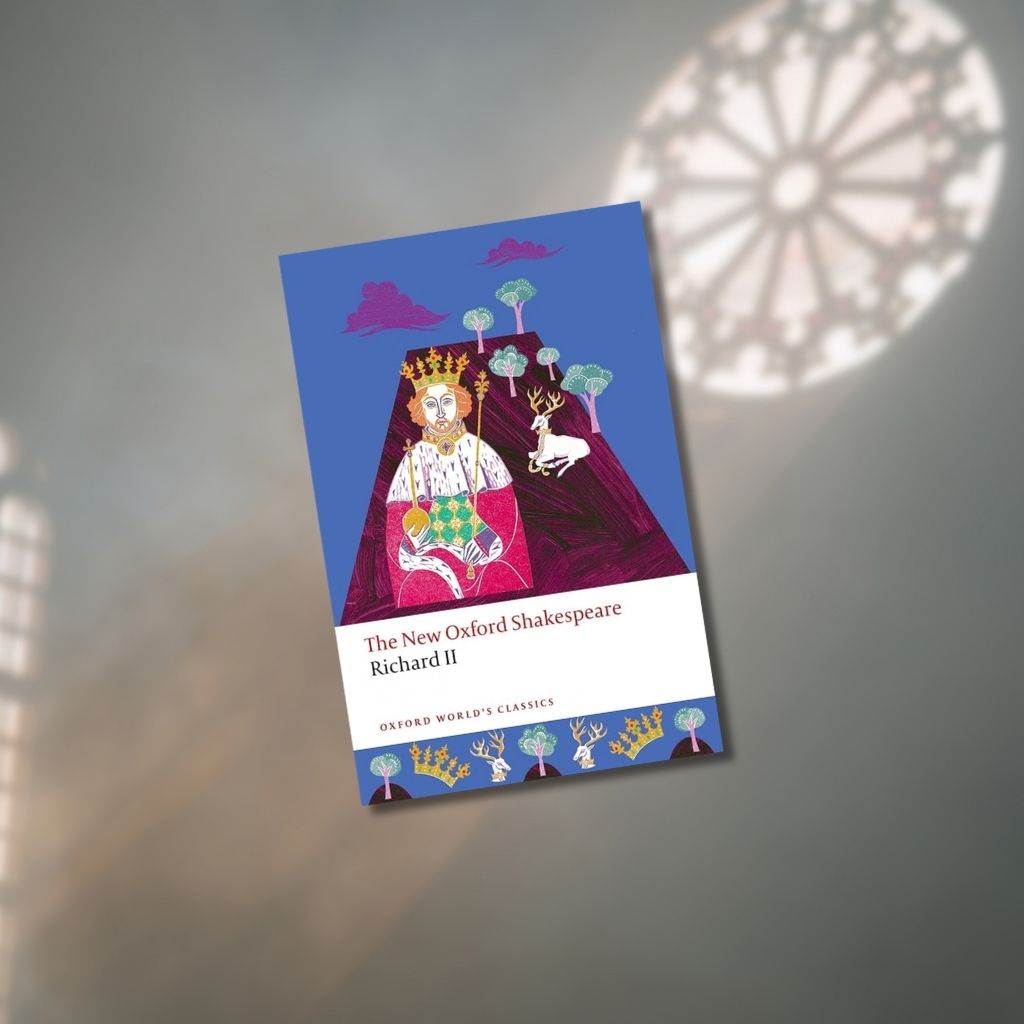
That’s simultaneously both way too much and not nearly enough on Edward II by Christopher Marlowe. But I have to move on to Richard II by Shakespeare now. I’ll be briefer because I don’t want to waste your time repeating myself—I made two videos on Richard II when I first read it. I loved it, so I made not only one as I usually do, but two videos. You can watch them here and here. I sometimes feel a bit embarrassed looking back at my old content, but I’m happy to say I still feel strongly about what I said back then. I’ll summarise what we’ve already discussed so you can watch those if they sound interesting.
Both of those videos focus on the character Richard, in the first one, we discussed the opening scene where the title character, Richard himself speaks the very first words of the play. Having the title character speaking immediately is quite unusual among Shakespeare plays, the other notable case is of course Richard III. There are some similarities between the two Richards who open their own shows: they’re both actors twice over. That observation leads to the discussion of the theatricality of Richard II, which I unpacked at some length with examples.
In the second video, we reflected on the question ‘what makes a king’. That’s the issue I believe this play is trying to explore with two different types of king, a king by birth and a king by conquest and achievement. Which one makes a better king? That should be an easy one to answer if you’ve read or watched the play. A more interesting question would be, who does Shakespeare think is the rightful king, or who does Shakespeare want us to think is the rightful king? A strong feature of this play is the many bible references. There are a lot more quotations and allusions to the bible than all other Shakespeare’s plays, and certainly no other protagonist explicitly and frequently compares himself to Christ like Richard does. There’s a parallel between King Richard and Jesus when Richard comes down from up high to the base court, then to prison, and ultimately, death; from a king sitting on the glorious throne of God to becoming a vulnerable deserted humiliated human being. I tried to give quotes and examples to back up my points too.
In prison
Lastly, I’m going to compare the scene where Edward and Richard are in prison, right before they are murdered.
EDWARD
Who’s there? What light is that? Wherefore comes thou?LIGHTBORN
To comfort you and bring you joyful news.EDWARD
Small comfort finds poor Edward in thy looks.
Villain, I know thou com’st to murder me.LIGHTBORN
To murder you, my most gracious lord?
Far is it from my heart to do you harm.
The queen sent me to see how you were used,
For she relents at this your misery.
And what eyes can refrain from shedding tears
To see a king in this most piteous state?EDWARD
Weep’st thou already? List awhile to me,
And then thy heart, were it as Gourney’s is,
Or as Matravers’, hewn from the Caucasus,
Yet will it melt ere I have done my tale.
This dungeon where they keep me is the sink
Wherein the filth of all the castle falls.LIGHTBORN
O villains!EDWARD
And there in mire and puddle have I stood
This ten days’ space; and lest that I should sleep,
One plays continually upon a drum.
They give me bread and water, being a king,
So that for want of sleep and sustenance
My mind’s distempered and my body’s numbed,
And whether I have limbs or no, I know not.
O, would my blood dropped out from every vein,
As doth this water from my tattered robes.
Tell Isabel the Queen I looked not thus
When for her sake I ran at tilt in France
And there unhorsed the Duke of Cleremont. (24.41-69)
Lightborn is the man Mortimer sent to murder Edward and Edward knows it instinctively. However, at the smallest sign of sympathy, Edward pours out his sorrows to this murderer, “Weep’st thou already? List awhile to me”. Notice his complaints solely focuses on the physical torments: the dungeon is a sewer, he stands in water and filth, he can’t sleep, he’s starving, he’s half-naked, he loses all feelings in his limbs.
It’s an awful image. Then I was dazzled by a sudden moment of glory. I love the last three lines when he says
Tell Isabel the Queen I looked not thus
When for her sake I ran at tilt in France
And there unhorsed the Duke of Cleremont.
It brings back a story from a time before our play starts. To win the heart of Isabella, the young and dashing Edward jousted with the lords in France. What a joyful and victorious scene. Three short lines conjure up a sea of emotions. Was it for this that I wooed you? But what hurts Edward more: I was once glorious, and look at me now, humiliated, wasting away in a dungeon. A few lines later,
EDWARD
One jewel have I left; receive thou this.
Still fear I, and I know not what’s the cause,
But every joint shakes as I give it thee.
O if thou harbour’st murder in thy heart,
Let this gift change thy mind and save thy soul.
Know that I am a king—O, at that name,
I feel a hell of grief. Where is my crown?
Gone, gone. And do I remain alive?LIGHTBORN
You’re overwatched, my lord; lie down and rest.EDWARD
But that grief keeps me waking, I should sleep;
For not these ten days have these eyes’ lids closed.
Now as I speak they fall, and yet with fear
Open again. O wherefore sits thou here?LIGHTBORN
If you mistrust me, I’ll be gone, my lord.EDWARD
No, no, for if thou mean’st to murder me,
Thou wilt return again, and therefore stay.
[He falls asleep]LIGHTBORN
He sleeps.EDWARD
[Starting] O let me not die! Yet stay, O stay awhile!LIGHTBORN
How now, my lord?EDWARD
Something still buzzeth in mine ears
And tells me, if I sleep I never wake.
This fear is that which makes me tremble thus;
And therefore tell me, wherefore art thou come?LIGHTBORN
To rid thee of thy life. Maltravers, come![Enter MALTRAVERS]
EDWARD
I am too weak and feeble to resist;
Assist me, sweet God, and receive my soul. (24.83-108)
And he dies. One thing that comes across the clearest in this section is his fear of death. Even though the physical suffering has been horrendous, he still really doesn’t want to die. But when death comes, he’s too weak and feeble to resist it. This aspect of his character remains unchanged throughout.
Richard on the other hand has been weak and useless throughout too, I talked about his ‘resistless fall’ in one of the previous videos. But when the murderer turns up, Richard, who doesn’t even step on a bug, to my great surprise, puts up a valiant fight, which has never happened before in the play, in his life.
I’m going to end with Richard’s soliloquy given before he dies. It’s a long soliloquy. Richard is not one for action; he talks. He doesn’t need someone like Lightborn to have a conversation with. He can talk all by himself.
While you read, see if you can notice a few things. Firstly, in contrast to Edward, Richard doesn’t seem to see or feel any physical suffering. His soliloquy solely focuses on the confusion and sorrow in his mind, as if only his brain and his soul are still functioning. Secondly, there’s no fear of death. Instead of something ‘buzzing’ in Edward’s ears, Richard hears music. On stage, this can be real music, or it can be music in Richard’s head. The contemplating on time and music creates an otherworldly atmosphere, as if his soul has departed from this tragedy before his body is killed. Thirdly, see if you can spot the metaphor of a mechanical clock. Clocks that tell hours and minutes are a cutting edge technology and invention at the time. Richard’s sighs, tears and groans mark the passage of time like a clock.
RICHARD
I have been studying how I may compare
This prison where I live unto the world;
And for because the world is populous,
And here is not a creature but myself,
I cannot do it. Yet I’ll hammer it out.
My brain I’ll prove the female to my soul,
My soul the father, and these two beget
A generation of still-breeding thoughts;
And these same thoughts people this little world
In humours like the people of this world,
For no thought is contented. The better sort,
As thoughts of things divine, are intermixed
With scruples, and do set the word itself
Against the word, as thus: ‘Come, little ones’,
And then again:
‘It is as hard to come as for a camel
To thread the postern of a needle’s eye.’Thoughts tending to ambition, they do plot
Unlikely wonders: how these vain weak nails
May tear a passage through the flinty ribs
Of this hard world, my ragged prison walls;
And, for they cannot, die in their own pride.Thoughts tending to content flatter themselves
That they are not the first of fortune’s slaves,
Nor shall not be the last—like seely beggars,
Who, sitting in the stocks, refuge their shame
That many have and others must set there;
And in this thought they find a kind of ease,
Bearing their own misfortunes on the back
Of such as have before endured the like.Thus play I in one person many people,
And none contented. Sometimes am I king;
Then treasons make me wish myself a beggar,
And so I am. Then crushing penury
Persuades me I was better when a king;
Then am I kinged again, and by and by,
Think that I am unkinged by Bolingbroke,
And straight am nothing. But whate’er I be,
Nor I, nor any man that but man is,
With nothing shall be pleased till he be eased
With being nothing.Music do I hear?
Ha, ha; keep time! How sour sweet music is
When time is broke and no proportion kept.
So is it in the music of men’s lives.
And here have I the daintiness of ear
To check time broke in a disordered string;
But for the concord of my state and time
Had not an ear to hear my true time broke.
I wasted time, and now doth time waste me,
For now hath time made me his numb’ring clock.
My thoughts are minutes, and with sighs they jar
Their watches on unto mine eyes, the outward watch
Whereto my finger, like a dial’s point,
Is pointing still, in cleansing them from tears.
Now, sir, the sound that tells what hour it is
Are clamorous groans which strike upon my heart,
Which is the bell. So sighs and tears and groans
Show minutes, times, and hours. But my time
Runs posting on in Bolingbroke’s proud joy,
While I stand fooling here, his jack of the clock.This music mads me. Let it sound no more;
For though it have holp mad men to their wits,
In me it seems it will make wise men mad.
Yet blessing on his heart that gives it me,
For ’tis a sign of love, and love to Richard
Is a strange brooch in this all-hating world.
The two scenes are pretty representative of the overall feelings of the two plays. Edward II is action-packed and fast-paced, Richard II is more reflective and inward-looking. Which style of drama do you prefer? Which story do you prefer? Which playwright do you prefer?


Leave a Reply